A connected layout
Bring paths, planting and seating areas together so the garden feels natural to move through.
Garden design
A connected plan for planting, paths and the places you want to spend time—not a collection of ideas that never quite fit together.
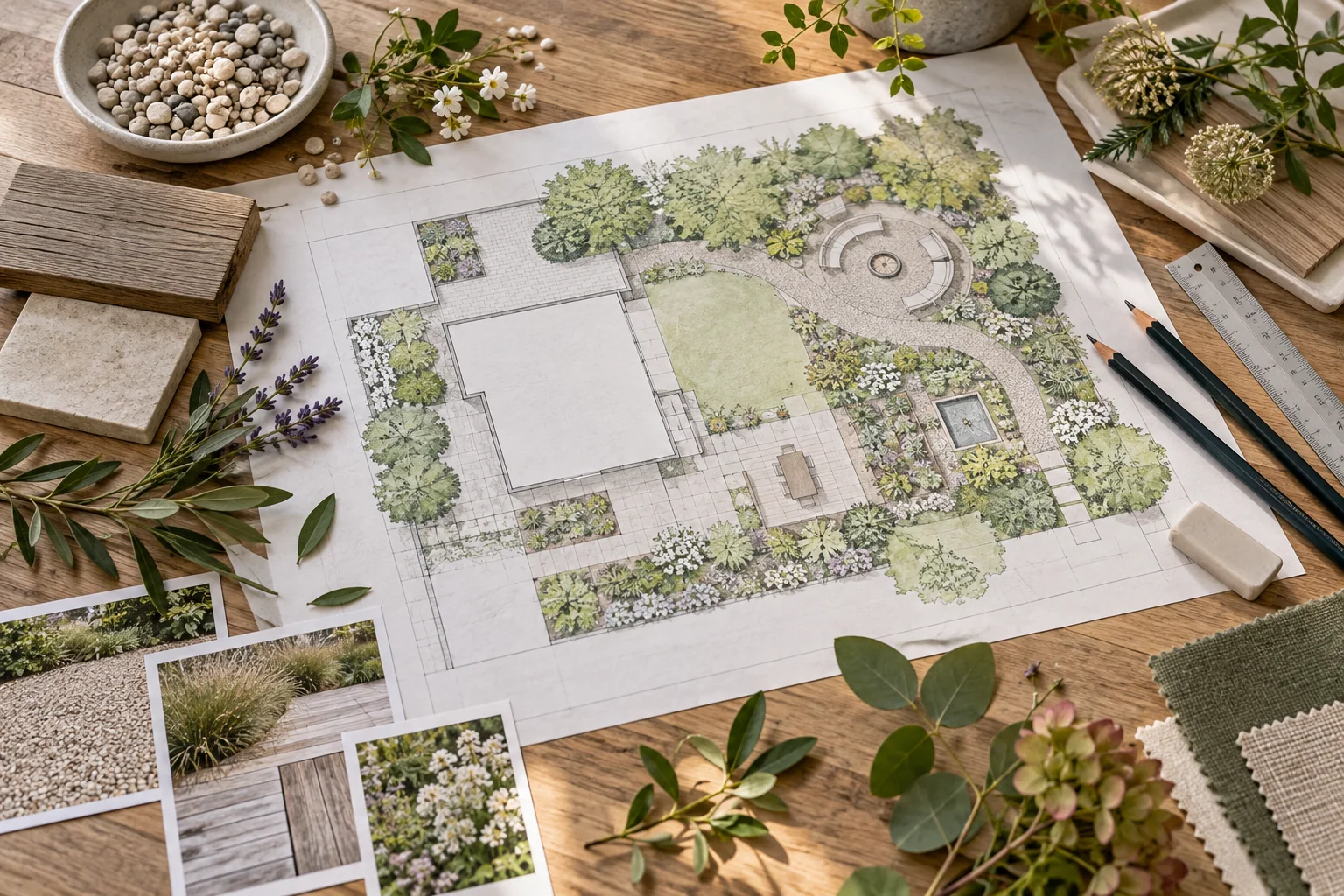
Bring paths, planting and seating areas together so the garden feels natural to move through.
Use established trees, an existing deck or a favourite sunny spot as part of the starting point.
Separate the changes you want now from later work, with the whole space in mind.
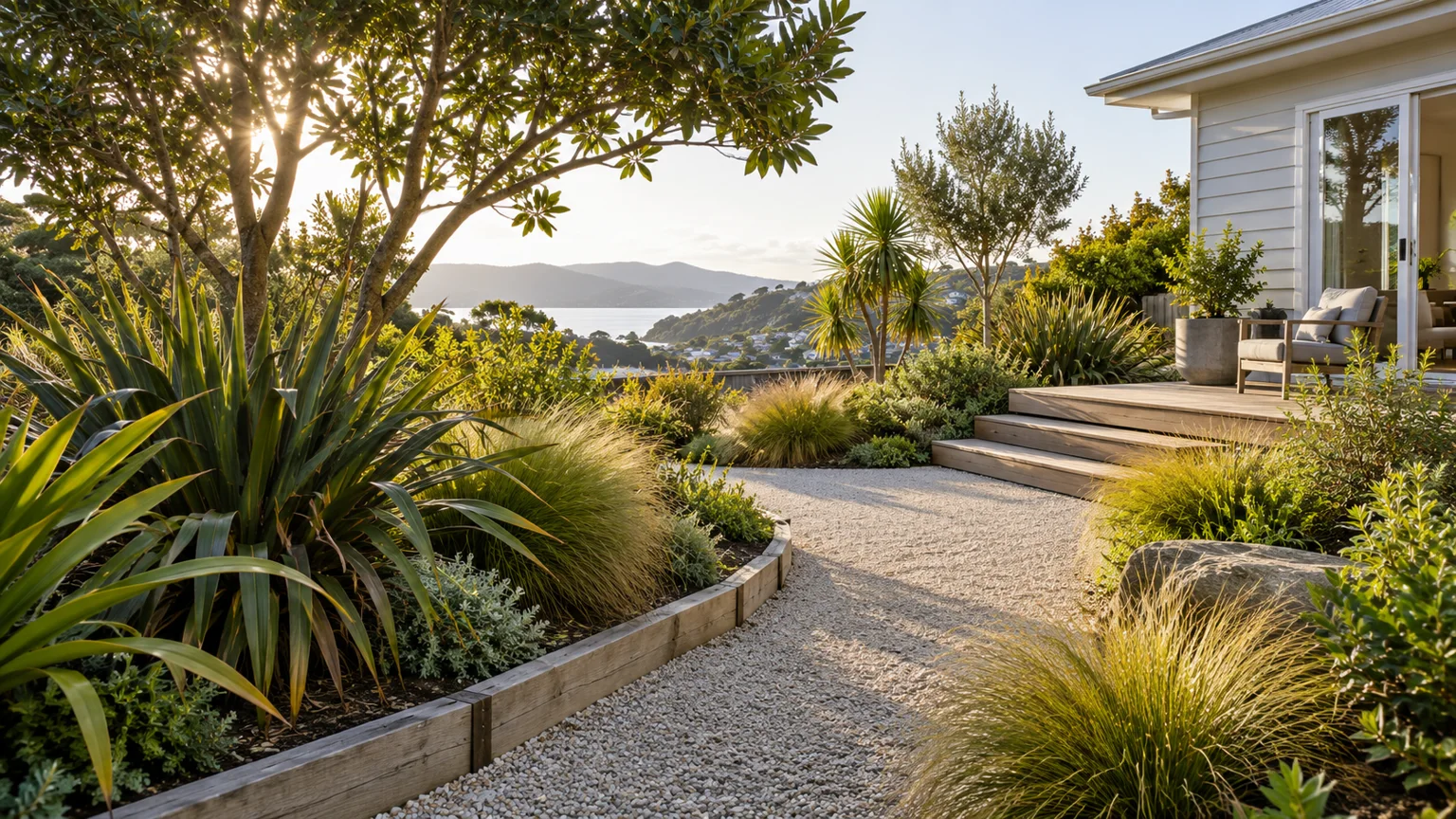
An empty corner, a narrow side path and a lawn nobody uses may look like separate problems. A garden design looks at how they connect. Where do you move through the space? Where would you like to sit? What do you want to see from inside the house? The answers help shape a layout that feels natural to use.
A new direction does not have to mean starting again. An established tree, an existing deck or a favourite sunny spot can be the starting point. We look at what is worth keeping, what needs changing and where a small adjustment could make the garden work better.
The brief brings together the layout, planting direction, materials and your priorities. It also considers access, the relationship to the house and how much upkeep you want. Before moving forward, make the design scope, deliverables and any site information still needed clear.
If the entire garden is more than you want to tackle at once, the plan can separate immediate priorities from later work. Thinking ahead helps avoid a path, planting bed or seating area that has to move when the next stage begins.
Tell us about your spaceTell us about your garden and the difference you want to make.